Sleeping in a hot car without AC comes down to moving air across your skin and blocking heat before it builds up. Use cross-flow ventilation, a battery-safe fan, and a portable power station instead of the car battery.
If you have been searching for how to sleep in a hot room without AC, the same heat-management principles apply when the room is a parked car on a warm night. The difference is that a car has a smaller cabin, thinner walls, and a battery budget you can drain if you are not careful.
Problem
A parked car traps heat like a greenhouse, and running the engine to power the AC while you sleep risks carbon monoxide poisoning.
Possible Solutions
Combine cross-flow window ventilation, reflective window shades, a low-power fan running from a portable power station, and spot-cooling tricks such as frozen water bottles or damp towels.
Key Takeaways
Ventilate first: Crack opposite windows to create cross-flow before adding any fan.
Block the sun: Reflective exterior shades stop heat before it enters the glass.
Power wisely: Run fans from a portable power station, not the starter battery.
Know the limits: Skip car sleeping when the heat index stays above 90°F.
Check the law: Overnight parking and idling rules vary by city and state.
How to Cool a Hot Car for Sleep: The Fastest Wins
Ventilation First: Cross-Flow Window Positioning That Actually Works
Before you think about fans or ice, you need a path for hot air to leave the cabin. A car parked with all windows closed traps heat like a greenhouse, and the air near the roof can become significantly hotter than the outdoor air. Cracking two opposite windows a few inches creates cross-flow ventilation: cooler outside air enters through one window, pushes warm air across the cabin, and exits through the other. The key is to position the openings so they are not on the same side of the vehicle.
If you are concerned about security or light rain, use window deflectors or clip-on vent shades that hold the glass open a fixed amount. These let air move while keeping the opening small enough to discourage casual entry. Keep in mind that cross-flow works best when there is at least a light breeze outside; on a perfectly still night, the airflow will be weaker and you will need a fan to help.
Sleep Tip
Open the front passenger window and the rear driver-side window a few inches each. That diagonal path pulls air across the cabin instead of straight through one side.
Block the Sun Before It Becomes Trapped Heat
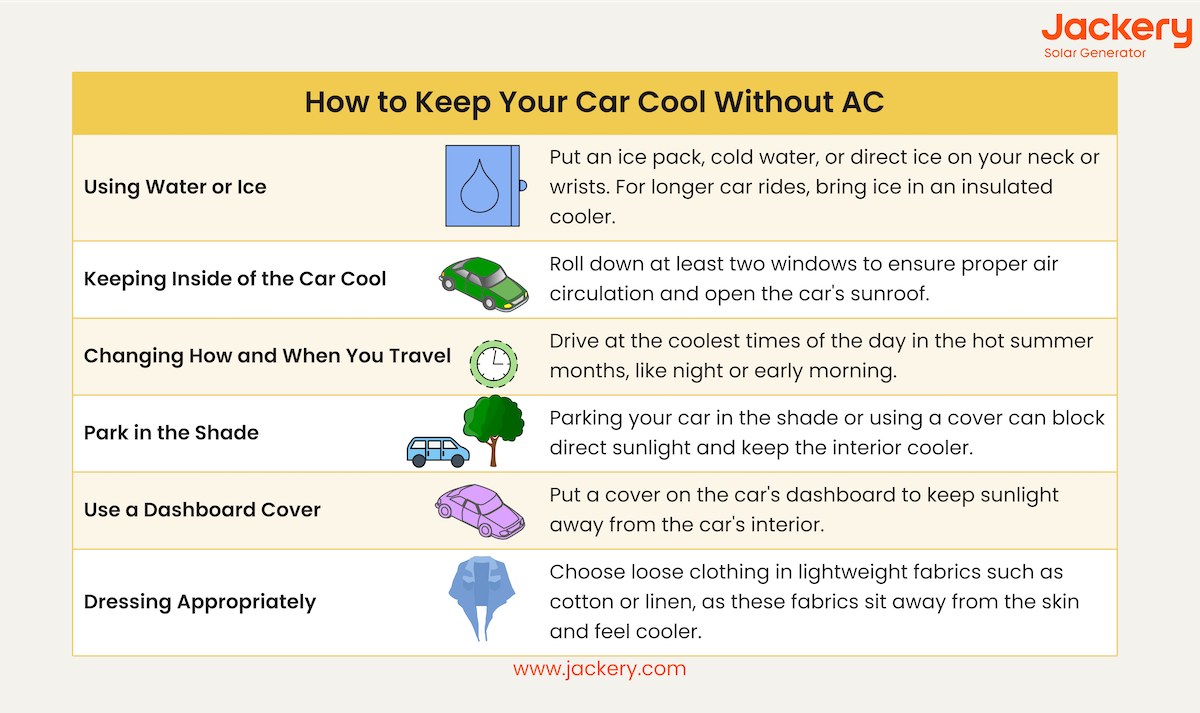
The single most effective way to cool a car for sleep is to stop it from heating up in the first place. If you are camping in a vehicle, park in the shade whenever possible, and use a reflective windshield cover on the outside of the glass. An exterior cover blocks solar radiation before it passes through the glass, while an interior sunshade only reflects some of the heat back out. For side windows, use fitted fabric or foil-lined panels that press into the window frame.
Roof and windshield are the main heat entry points, but do not forget the windows. Even a thin reflective layer on every piece of glass can drop the cabin temperature noticeably during the day, which means less stored heat to radiate back at you at night.
Window Shades and Heat Barriers: What Really Cuts the Heat
Reflective window shades block incoming solar heat during the day.
Reflective vs. Insulated vs. Custom-Fit Shades: Which Fits Your Vehicle
Window shades for cars fall into three broad categories. Reflective shades, usually made of Mylar or foil-coated fabric, bounce solar energy back out. They are effective at reducing daytime heat gain but do little to insulate against heat that is already inside. Insulated shades add a foam or fabric layer that slows heat transfer in both directions. Custom-fit shades are cut to match a specific vehicle’s windows, which reduces gaps where air and light can leak.
For sleeping in a car, you usually want a combination: reflective shades on the windshield and side windows to keep morning sun from waking you, and insulated panels on the windows where you need privacy. Custom-fit shades cost more and take up trunk space, but they stay in place better and create a darker, more private sleep environment.
Advantages
Reflective shades are lightweight and fold flat for storage
Insulated panels block both heat and outside light
Custom-fit covers stay in place with window frames
Considerations
Reflective shades can tear at the seams over time
Insulated panels are bulkier to store
Custom-fit options cost more and require vehicle-specific ordering
DIY Window Covers That Protect Privacy and Drop Cabin Temps
If you do not want to buy a full set of custom shades, you can make simple window covers from rigid foam insulation board, foil tape, and fabric. Cut the board slightly larger than the window opening and wrap it in fabric so it presses into the frame. This creates a removable panel that blocks light, adds insulation, and gives you privacy without permanent mounting.
Another budget option is to use reflective sunshades designed for windshields and cut them to fit the side windows. The tradeoff is that DIY covers rarely look as clean as custom panels, and the edges may let light in. They also need to be stored somewhere when not in use, so consider how much cargo space you are willing to give up.
Fans That Move Air Without Moving Your Car: A Practical Comparison
USB Desk Fans vs. 12V High-Flow Fans: Airflow vs. Power Draw
Once the car is ventilated, a fan is what actually makes you feel cool. A fan does not lower the air temperature, but moving air accelerates evaporative cooling on your skin, which is why a breeze feels cooler than still air at the same temperature. For sleeping in a car, you have two main power options: USB fans that run from a power bank, and 12V fans that plug into the car’s accessory socket.
USB desk fans are quiet, cheap, and easy to clip to a headrest or window. Their main limitation is airflow; a small USB fan moves enough air to cool your face, but not the whole cabin. 12V high-flow fans move much more air and can be placed on the dashboard or rear cargo area, but they draw more power and can drain a car battery if left running all night.
Sleep Science
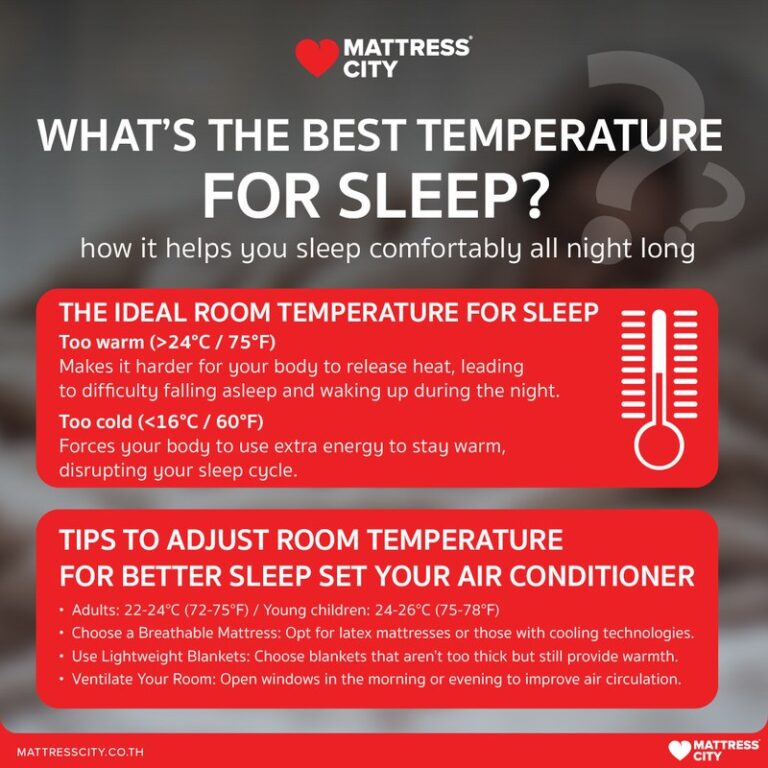
Your core body temperature begins to drop in the evening, which helps signal to your brain that it is time to sleep. When the surrounding air stays warm, your body has to work harder to release heat, which can delay sleep onset and increase nighttime awakenings. Moving air helps your body cool itself through evaporation, but it does not lower the actual air temperature.
Advantages
USB fans run from power banks and are easy to position
12V fans move more air and can cool a larger area
Considerations
USB fans have limited airflow and short battery life at high speed
12V fans draw significant current and need battery monitoring
Rechargeable Clip-On Fans: Real Battery Life and Mounting Limits
Rechargeable clip-on fans are popular for car camping because they run on internal batteries and do not need a power cord near your face. The useful question is not whether they work, but how long they last on a single charge. Many run for four to eight hours on low speed, which is enough for a single night, but high speed cuts that time roughly in half. If you plan to use one every night, you will need a way to recharge it during the day, either from a power bank, a solar panel, or the car’s accessory socket while you drive.
Mounting is another consideration. Clip-on fans need a solid anchor point such as a headrest post, a seat belt guide, or a window frame. Some fans have flexible legs that can wrap around a grab handle, but they may vibrate or slip when the car shifts. Test the fan’s position before you commit to sleeping, and make sure the blades cannot hit your face or hair.
Powering Your Cooling Gear Without Draining the Car Battery<
A power inverter connects a car battery to a portable fan for overnight cooling.
/h2>
12V Socket Draw Limits and Engine-Off Voltage Rules
The accessory socket in most cars is rated for a continuous draw of about 10 to 15 amps, which is roughly 120 to 180 watts at 12 volts. A high-flow 12V fan might draw 2 to 5 amps, which is well within the socket’s limit, but the real problem is the car battery. A typical lead-acid starter battery has about 50 amp-hours of usable capacity, and you should not discharge it below about 50 percent if you want it to start the engine the next morning.
That gives you roughly 25 amp-hours of usable energy. A 3-amp fan would drain that in about eight hours, which is a full night but leaves no margin for starting the engine. If your car has an auxiliary battery or a hybrid system with a large lithium pack, the math is different, but you should still avoid drawing power from the starter battery unless you have a jump-starter pack as a backup.
Jump-Starter Packs and Portable Power Stations: Capacity Math for a Full Night
A dedicated power station is the safer way to run fans overnight. These units contain their own lithium battery, an inverter or DC output, and often a solar input. The capacity is measured in watt-hours, and the math is straightforward: a 200-watt-hour power station can run a 10-watt fan for about 20 hours, but only for about 1.5 hours if the fan draws 130 watts. Always check the fan’s actual power draw, not the motor’s rated wattage, because brushless fans can be more efficient than their labels suggest.
Jump-starter packs are not designed for continuous overnight use. They are meant to deliver a short, high-current burst to start an engine, and running a fan from them for eight hours can drain them quickly and leave them without enough charge to jump-start a car in the morning. If you carry a jump-starter pack, keep it for emergencies and use a power station or a second battery for your fan.
Battery Protection Features and the Moment You Should Stop Drawing Power
Many modern cars have a low-voltage cutoff that shuts off accessory power when the battery drops to a preset level, usually around 11.5 to 12.0 volts. This protects the starter battery, but it also means your fan will stop in the middle of the night. If you want to run a fan until morning, you need a power station with its own low-voltage cutoff, or you need to manually check the battery voltage before you go to sleep.
A simple rule is to stop drawing power when the battery reaches about 12.2 volts, which is roughly 50 percent state of charge. If you do not have a voltage display, a cheap plug-in voltmeter that fits in the accessory socket can tell you the battery level. When in doubt, use a power station instead of the car battery.
Heat Index
A measure of how hot it feels when relative humidity is combined with air temperature. High humidity makes sweat evaporate more slowly, so your body cannot cool itself as effectively.
Evaporative Cooling and Old-School Tricks That Buy You Time
The Frozen Water Bottle Method: Placement and Melt Timing
Frozen water bottles are a classic car-camping trick because they cool the air around you without using electricity. The key is placement: put the bottle in a shallow pan or wrap it in a thin towel and place it near your neck, wrists, or groin, where large blood vessels sit close to the skin. As the ice melts, it absorbs heat from the surrounding air and creates a small pocket of cooler air.
The melt timing depends on the bottle size and the ambient temperature. A standard 16-ounce bottle can stay cold for several hours in a warm car, but it will not cool the whole cabin. It is a spot-cooling method, not a replacement for ventilation. If you use multiple bottles, rotate them between a cooler and your sleeping area so you always have a cold one ready.
Damp Towels and DIY Swamp Coolers: Why Humidity Kills the Effect
A damp towel draped over your neck or chest uses evaporative cooling to pull heat away from your skin. This works well in dry climates, but in humid conditions, the air is already saturated with moisture and evaporation slows dramatically. The same principle applies to DIY swamp coolers that blow air through a wet pad: they only cool effectively when the wet-bulb temperature is low enough.
If you are in a humid region, skip the wet-towel method and focus on airflow instead. A fan moving dry air over your skin will do more for comfort than a damp towel that stays soggy all night. If you do use a damp towel, wring it out well so it is not dripping, and place it where it can dry quickly.
Safety and Legal Rules for Sleeping in a Hot Car
Carbon Monoxide: Why You Never Run the Engine or AC While Asleep
Running the engine to power the air conditioner while you sleep is one of the most dangerous things you can do in a parked car. Exhaust can leak into the cabin through a faulty seal, a rusted floorpan, or even a tailpipe blocked by mud or snow. Carbon monoxide is colorless, odorless, and can cause unconsciousness and death without warning. The risk is highest when the car is parked downwind of the exhaust, which can happen even with the windows cracked.
Never rely on the car’s AC to keep you cool overnight. If you need air movement, use a battery-powered fan and keep the windows open enough for fresh air. If you must run the engine for a few minutes to charge a device, do it while you are awake, and always check that the exhaust pipe is clear before you start.
State and Local Rules on Overnight Parking, Idling, and Rest Stops
Sleeping in a car is legal in some places and restricted in others. Many cities have ordinances against overnight parking on public streets, and some rest stops limit parking to a few hours. Idling laws also vary by state; some ban idling for more than a few minutes, while others allow it in certain conditions. These rules change frequently and differ by city, county, and state, so check local regulations before you plan to sleep in your car.
If you are using a private property such as a campground or a friend’s driveway, get permission first. Some businesses allow overnight parking as a courtesy, but they may have rules about noise, generators, or how long you can stay. A quick online search for the specific city or county can save you a knock on the window at 2 a.m.
Setting Up Different Vehicles: Sedans, SUVs, Vans, and Trucks
Flat Sleeping Surfaces and Cargo Space: What Your Layout Allows
The vehicle you drive determines how comfortable you can get. A sedan with folding rear seats can create a long, mostly flat area from the trunk to the front seats, but you may need to fill the footwell with storage to level the surface. An SUV or crossover with the rear seats folded flat offers more headroom and a larger sleeping area, but the wheel wells can eat into width. A van or minivan is the easiest to set up because the cargo area is tall and boxy, and you can often fit a full-size mattress.
Before you buy any sleeping gear, measure the longest diagonal from the back of the front seat to the rear hatch, and the width between the wheel wells. A camping mattress that is too long will bend against the front seats, and one that is too wide will curl up the sides. Test the layout with your actual sleeping bag or blanket to make sure you can stretch out.
Privacy, Security, and Window Coverage by Body Style
Privacy is a bigger concern in a sedan than in a van because the windows are lower and the cabin is smaller. Window covers that press into the frame block the view from outside, but they also trap heat inside during the day. If you are sleeping in a public place, you may want to cover all windows, not just the ones near your head, so passersby cannot see your gear.
Security is another factor. A van or SUV with no partition between the cargo area and the front seats gives you more room, but it also means someone can see you from the windshield. A simple curtain rod or a fabric panel behind the front seats can create a visual barrier. In a truck with a camper shell, the side windows are usually higher, which gives you more privacy but less airflow.
When to Call It: Heat Safety Limits and Your Next Steps
Heat Index Thresholds and Who Should Never Attempt This
Heat index combines air temperature and humidity to estimate how hot it feels. When the heat index is above about 80°F, your body’s ability to cool itself starts to decline, and above 90°F, the risk of heat exhaustion rises significantly. If the overnight low does not drop below 75°F or the heat index stays above 90°F, sleeping in a car without AC is probably not safe.
Certain people should never attempt to sleep in a hot car: older adults, young children, pregnant women, and anyone with a chronic medical condition such as heart disease, diabetes, or respiratory issues. The same applies to anyone taking medications that affect sweating or body temperature. If you are not used to the heat, start with a single night and see how your body responds.
Gear Maintenance Checklist and Upgrade Path for Warmer Climates
If you plan to make car sleeping a regular habit, a little maintenance goes a long way. Check your fan blades for dust and debris, clean the air intake on your power station, and inspect your window shades for tears or gaps. Charge your power bank and power station fully before each trip, and test your low-voltage cutoff once a month.
For warmer climates, consider upgrading to a higher-capacity power station, a larger fan, or a portable evaporative cooler that uses less power than a compressor-based unit. You can also add a solar panel on the dashboard or roof to top off your power station during the day. The goal is to build a system that runs quietly, lasts all night, and never leaves you stranded.
Final Thoughts
A cool night in a parked car is achievable when you treat the cabin like a small room: vent the heat, shade the glass, and power your fan from a battery you are not also using to start the engine. The moment the heat index stays above 90°F, or you feel dizzy, nauseated, or overheated, call it and find air-conditioned shelter.
Create a Better Sleep Environment
Before your next car-camping trip, set up your cooling gear at home on a warm evening and run a full-night test. You will learn what works, what drains your battery, and what keeps you comfortable before you are miles from home.
Frequently Asked Questions
Cracking two opposite windows helps with cross-flow ventilation, but it does not make a hot car safe in extreme heat. Always check the heat index and your own health before attempting to sleep in a car.
A rechargeable clip-on fan aimed at your face and neck works well for a single night, while a 12V high-flow fan moves more air if you have a power station. Choose based on how much battery capacity you can carry.
Use a portable power station instead of the car’s starter battery. If you must use the car battery, check the voltage and stop drawing power at around 12.2 volts.
Yes, for light use on low speed, but battery life is limited to four to eight hours. Bring a power bank to recharge them during the day.
Yes, because shade reduces direct sunlight but does not stop heat from radiating off nearby surfaces. Reflective shades on the windshield and side windows still help.
No. Running the engine while you sleep risks carbon monoxide poisoning, even with windows cracked. Use battery-powered fans and ventilation instead.
Hi, I'm Elliot Sage. I used to wake up exhausted every single morning—until I started taking sleep seriously. Now I run AdiAnya, where I review and recommend the sleep tools that actually changed my nights: sound machines, weighted blankets, sleep masks, and bedroom scents. If you're ready to finally sleep well, you're in the right place.