How to Keep a Cooling Pillow Cool All Night

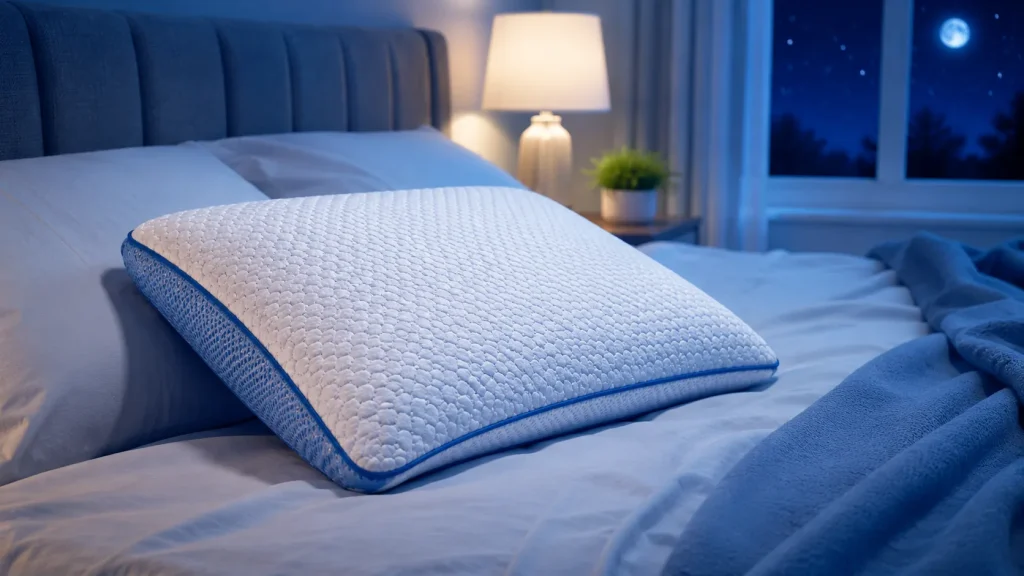
You bought a Cooling Body Pillow That Sleeps Cooler”>Cooling Memory Foam Pillow Guide: What Every Driver Should Know”>Cooling Pillowcase Guide: What Every Driver Should Know”>Cooling Pillows for Kids’ Comfort”>Cooling Pillow Facts That Help You Sleep Cooler”>Cooling Pillow Myths Explained for Better Sleep”>Cooling Pillow or Topper? Choose the Better Sleep Fix”>Cooling Pillow or Cooling Pillowcase: Which Cools Better?”>Cooling Pillow vs Memory Foam Pillow: Which Wins?”>Cooling Pillow vs Gel Pillow: What Hot Sleepers Should Know”>Cooling Pillow vs Regular Pillow: Which One Fits You?”>Cooling Pillow Materials for Hot Sleepers”>cooling pillow. The first night felt amazing — cool, fresh, genuinely comfortable. But a few weeks in, you notice it’s warming up faster than it used to. Sound familiar? Learning how to keep a cooling pillow cool all night isn’t just about the pillow itself. It’s about everything around it. In this article, I’ll share the practical steps that actually make a difference — from your bedroom temperature to your pillowcase choice to a few habits most people never think about.
Why Your Cooling Pillow Warms Up — The Quick Answer
Here’s something that surprises most people — a cooling pillow doesn’t stay cold on its own forever. It works by managing heat, not creating cold. And when conditions around it aren’t right, even the best cooling pillow struggles.
Think of it like a breathable jacket on a warm day. The jacket helps — but if you’re standing in direct sun with no breeze, you’ll still feel warm. The jacket can only do so much. Your cooling pillow works the same way.
There are four main reasons a cooling pillow loses its effectiveness overnight:
- The bedroom is too warm — the pillow has nowhere to release absorbed heat
- The pillowcase blocks airflow — a thick case acts as an insulating barrier
- The pillow fill is clogged — dust, oils, and residue reduce breathability over time
- The cooling technology has been damaged — usually from incorrect washing or heat exposure
Each of these has a simple fix — and that’s exactly what we’ll cover now.
What Makes Cooling Pillows Cool — Material Science Guide
How Cooling Pillows Actually Work at Night
Have you ever wondered why your cooling pillow feels amazing for the first hour — and then slowly loses that effect? It’s not a defect. It’s physics.
Most cooling pillows use one of three methods to manage heat. Gel layers and copper infusions conduct heat away from your skin quickly — like a marble countertop pulling warmth from your hand. Open-cell foam and latex allow air to move freely through the fill, carrying heat away as you breathe and shift positions. And phase change materials — often called PCMs — absorb heat at a specific temperature and store it, releasing it slowly back into the cooler room overnight.
The critical thing to understand is this — all three methods have limits. Gel conducts heat until the gel itself warms up. Open-cell foam breathes freely until airflow slows. PCMs absorb heat until they reach capacity — then they need a cool room to reset.
When you understand how the cooling works, the tips for keeping it working all night make immediate sense.
Why Your Bedroom Temperature Is the Biggest Factor
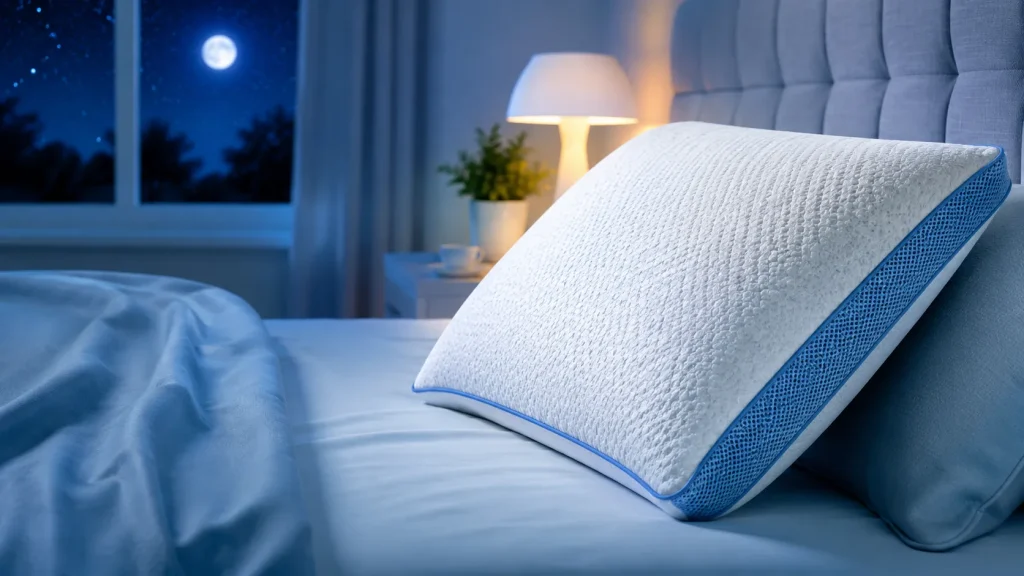
Most people focus entirely on the pillow when their sleep feels too warm. But the single biggest factor in keeping your cooling pillow effective all night isn’t the pillow at all — it’s your bedroom temperature.
Sleep researchers consistently suggest that the ideal bedroom temperature for quality sleep sits between 65°F and 68°F (18°C–20°C). At these temperatures, your body’s natural thermoregulation works efficiently — and your cooling pillow has somewhere to release the heat it absorbs from your head.
In a bedroom above 72°F, even the best cooling pillow faces an uphill battle. The pillow absorbs your body heat, tries to release it into the surrounding air — but the air is already warm. Heat has nowhere to go. The pillow warms up faster and takes longer to reset.
I noticed this myself one summer when I kept my bedroom at a comfortable but warmer temperature to save on electricity. My cooling pillow went from genuinely useful to barely noticeable within just a few nights. The moment I dropped the thermostat a few degrees, the difference was immediate.
💡 Room Temperature Tip: Run your air conditioning or a fan for at least 30 minutes before bed. A pre-cooled room gives your cooling pillow a significant advantage from the moment you lie down.
How Do Cooling Pillows Stay Cool? The Simple Truth
How to Keep a Cooling Pillow Cool All Night — 8 Practical Tips
Ready for the actual steps? These are the habits that make the biggest real-world difference. Some are simple swaps. Others are small routine changes. All of them work.
Tip 1 — Switch to a Breathable Pillowcase
This is the single most impactful change you can make — and the most overlooked. A standard cotton pillowcase with a high thread count acts like a thin blanket between you and the cooling technology. It blocks airflow and traps heat right at the surface.
Switch to a bamboo, Tencel, or performance knit pillowcase. These fabrics are naturally breathable and moisture-wicking. They let the cooling technology in your pillow actually reach your skin instead of being muffled by thick fabric.
In my experience, switching pillowcases alone improved my sleep comfort on warm nights more than any other single change. It costs very little and works immediately.
Tip 2 — Cool Your Room Before Bed
Run your AC or a fan for 30–45 minutes before sleep. Don’t wait until you’re already in bed. Pre-cooling the room gives the air a chance to reach a lower temperature — and gives your pillow a cool environment to release heat into all night.
Tip 3 — Use a Fan for Airflow — Not Just Cooling
A fan doesn’t just move cool air. It helps your cooling pillow release heat more effectively by creating continuous airflow around your sleep surface. Position a fan so it moves air across the bed — not directly at your face, which can dry out your sinuses overnight.
Even a small bedside fan on a low setting makes a meaningful difference for open-cell foam and gel cooling pillows.
Tip 4 — Don’t Stack Pillows on Top of Your Cooling Pillow
This one seems obvious in hindsight — but I’ve seen it missed constantly. Placing another pillow on top of your cooling pillow during the day, or using it as the bottom layer in a stack at night, traps heat inside instead of releasing it. The cooling pillow needs open air above and around it to breathe.
Use your cooling pillow as the top pillow — the one your head actually rests on. Let it have space.
Tip 5 — Keep Your Pillow Clean
Over time, sweat, body oils, and dust accumulate inside the pillow fill. This buildup clogs the tiny air channels in open-cell foam and reduces breathability significantly. A pillow that breathed freely when new can lose up to half its airflow after months of uncleaned use.
Use a washable pillow protector between the pillow and pillowcase. Wash the protector every 2–4 weeks. Spot clean the pillow itself every 3–6 months — or wash it according to the care label if it’s machine-safe.
Tip 6 — Air Your Pillow Out During the Day
This takes about 10 seconds and makes a genuine difference. When you make your bed in the morning, leave your cooling pillow uncovered and in the open air for an hour before replacing your pillowcase. This allows any trapped moisture to evaporate and helps PCM technology reset fully after a night of use.
Direct sunlight for 30–60 minutes also kills bacteria naturally and freshens the fill — without any water or chemicals.
Tip 7 — Match Your Bedding to Your Pillow
A cooling pillow works best as part of a complete cool sleep system. Thick, heavy bedding traps heat around your whole body — and your head and neck pay the price. Pair your cooling pillow with:
- Cotton percale or bamboo sheets — cooler and more breathable than microfiber or flannel
- A lightweight duvet or blanket — appropriate for the season, not your heaviest option year-round
- A breathable mattress protector — thick waterproof protectors trap heat and warm the entire sleep surface
Tip 8 — Check If the Cooling Technology Is Still Working
Cooling pillows don’t last forever. Gel can degrade after 2–3 years of heavy use. PCM capsules can be destroyed by high heat during washing. Open-cell foam can compress and lose breathability over time.
Do a simple test. On a cool morning, press your hand firmly on the pillow surface for 10 seconds, then lift it. A working cooling pillow should feel noticeably cooler than a standard pillow at the same room temperature. If it doesn’t — the cooling technology may have degraded and the pillow may need replacing.
Key Facts About Keeping Cooling Pillows Cool That Most People Miss
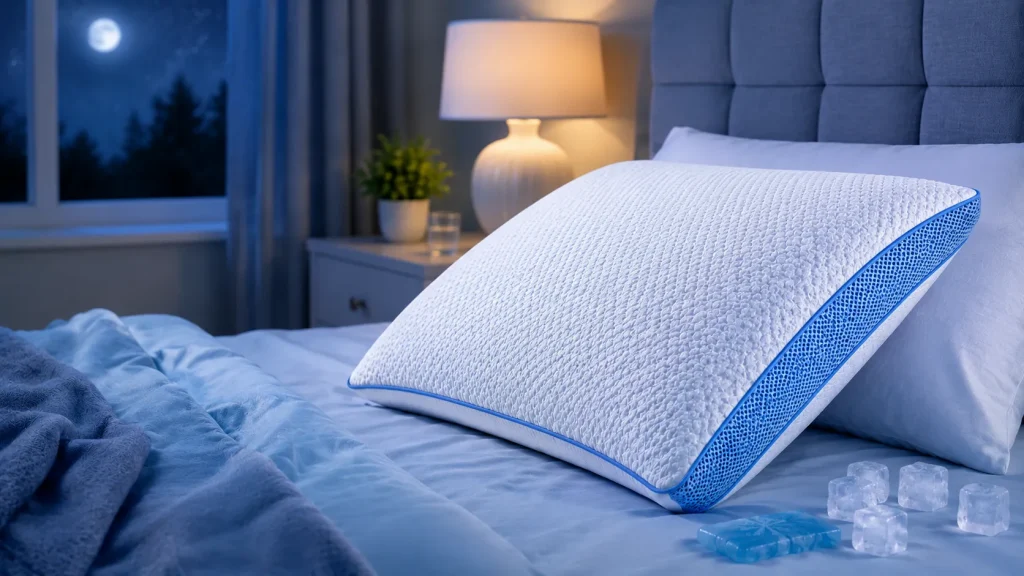
A few things consistently surprise people when I explain them — and knowing these can change how you approach overnight cooling comfort.
- PCM pillows need the room to cool down to reset. Phase change materials store heat and release it slowly as room temperature drops. If your bedroom stays warm all night, the PCM never fully resets — and performance drops each consecutive night until the room cools again.
- Your hair holds more heat than you think. Thick or long hair traps significant warmth between your head and the pillow. Wearing hair up loosely on warm nights reduces the heat load on your cooling pillow considerably.
- Washing removes pillow-clogging oils — but must be done correctly. Washing restores breathability, but hot water or fabric softener can damage cooling technology permanently. Cold water and no softener — every time.
- The pillow’s loft (height) affects cooling. A pillow that’s too high creates more contact between your neck and the fill — and more contact means more heat transfer. A lower loft allows better airflow around your head and neck.
- Humidity makes everything worse. High indoor humidity slows evaporation of sweat — reducing the effectiveness of moisture-wicking covers and breathable fills. A dehumidifier in very humid climates helps your cooling pillow perform closer to its potential.
Common Mistakes That Stop Cooling Pillows from Staying Cool
Even the best cooling pillow can’t overcome these habits. If your pillow isn’t staying cool all night, one of these is probably why.
Mistake 1 — Using a Thick or Microfiber Pillowcase
Microfiber is soft and affordable — but it’s one of the worst fabrics for a cooling pillow. It holds heat close to the surface and barely breathes. Switch to bamboo or Tencel and you’ll feel the difference immediately.
Mistake 2 — Making the Bed Immediately After Waking
Sealing a warm, slightly damp pillow under your duvet right after sleep traps residual heat and moisture inside. Give the pillow at least 30 minutes of open-air time before making the bed. This small habit keeps the fill fresher and more breathable each night.
Mistake 3 — Keeping a Warm Bedroom and Expecting the Pillow to Compensate
A cooling pillow is a sleep comfort tool — not a climate control system. It can’t cool a hot room. It works best when the room is already at a comfortable temperature. Think of the pillow as the final layer of cooling, not the first.
Mistake 4 — Washing With Hot Water or Fabric Softener
Hot water degrades gel bonding and foam cell walls. Fabric softener leaves a heat-trapping waxy residue inside breathable foam. Either mistake reduces cooling performance — sometimes permanently. Always cold water, always mild detergent, never softener.
Mistake 5 — Never Replacing an Old Pillow
Most cooling pillows perform well for 2–4 years with proper care. After that, foam compresses, gel degrades, and breathability drops significantly. If you’ve had your cooling pillow for several years and it’s simply not staying cool the way it used to — a replacement may genuinely be the answer.
💡 Quick Nightly Checklist: Cool room before bed ✅ — Breathable pillowcase on ✅ — Pillow on top of the stack ✅ — Fan on low ✅ — Lightweight bedding ✅. These five habits take seconds to implement and make a real overnight difference.
Who Benefits Most From These Tips?
These habits help any sleeper — but some people feel the difference more dramatically than others.
| Sleeper Type | Biggest Challenge | Most Helpful Tip |
|---|---|---|
| Hot sleepers | Pillow warms up within first hour | Pre-cool room + breathable pillowcase |
| Night sweaters | Moisture reduces breathability fast | Pillow protector + daily airing |
| Menopausal women | Hot flashes overwhelm cooling capacity | Fan airflow + PCM pillow + cool room |
| Side sleepers | More skin contact = more heat buildup | Lower loft pillow + bamboo pillowcase |
| Warm climate sleepers | Room stays warm all night | AC pre-cooling + dehumidifier |
| Light sleepers | Any warmth disrupts sleep cycle | Full cool sleep system approach |
If you’re a hot sleeper in a warm climate who also sweats at night — all of these tips apply to you simultaneously. Start with room temperature and pillowcase fabric first. Those two changes deliver the fastest results. How Does a Cooling Pillow Work? -A Simple Guide for Hot Sleepers
Frequently Asked Questions
How to keep a cooling pillow cool all night when the room is warm?
Pre-cool your bedroom for 30–45 minutes before sleep using AC or a fan. Use a breathable bamboo or Tencel pillowcase to maximize heat transfer from the pillow to the air. Run a low-speed fan beside the bed to help the pillow release absorbed heat continuously. These three steps together make the biggest combined difference in a warm room.
Why does my cooling pillow stop working after a few hours?
Most cooling pillows manage heat rather than create cold — so they have a natural limit. Gel pillows absorb heat until the gel warms up. PCM pillows store heat until they reach capacity. Open-cell foam depends on airflow to release heat. If your bedroom is warm, the pillow can’t release heat effectively and warms up faster. Cooler room temperature is the most direct fix.
Does a fan help a cooling pillow stay cooler longer?
Yes — significantly. A fan creates airflow that helps breathable foam and gel pillows release absorbed heat more efficiently. Even a low-speed bedside fan pointed across the bed rather than directly at your face makes a noticeable difference throughout the night.
Should I put my cooling pillow in the fridge or freezer before bed?
Only if the manufacturer specifically says this is safe. Most cooling pillows are not designed for freezer or fridge use. Extreme cold can crack gel layers, condense moisture inside foam, and cause mold issues when the pillow warms back to room temperature. Stick to the methods above — they’re safer and more consistent.
How long should a cooling pillow stay cool?
With the right environment and habits, a good cooling pillow can maintain comfortable temperature regulation throughout a full night of sleep. Gel surface pillows feel coolest in the first 1–2 hours. Open-cell foam and latex provide more consistent all-night breathability. PCM pillows can actively regulate temperature for 4–6 hours and partially reset as room temperature drops overnight.
Final Thoughts: Keeping Your Cooling Pillow Cool All Night
So — how to keep a cooling pillow cool all night? It starts with your bedroom temperature, continues with your pillowcase choice, and gets supported by a few simple daily habits that most people never think about.
The three things that make the biggest difference: cool your room before bed, switch to a breathable bamboo or Tencel pillowcase, and use a low fan to keep air moving around your sleep surface. Do all three and most cooling pillows perform significantly better.
Start with the pillowcase tonight — it costs very little, takes 30 seconds to change, and makes an immediate difference you’ll feel in the first hour of sleep. What Makes Cooling Pillows Cool — Full Materials Guide
=====================================