
What Makes Cooling Pillows Cool? The Real Science Explained

You’ve seen them everywhere — pillows labeled “cooling,” “gel-infused,” or “temperature-regulating.” But have you ever wondered what makes cooling pillows cool in the first place? It’s not magic. And it’s not marketing fluff either — at least not always. In this article, I’ll walk you through the real science behind cooling pillows, the materials that actually work, and what separates a genuinely cool pillow from one that’s just wearing the label.
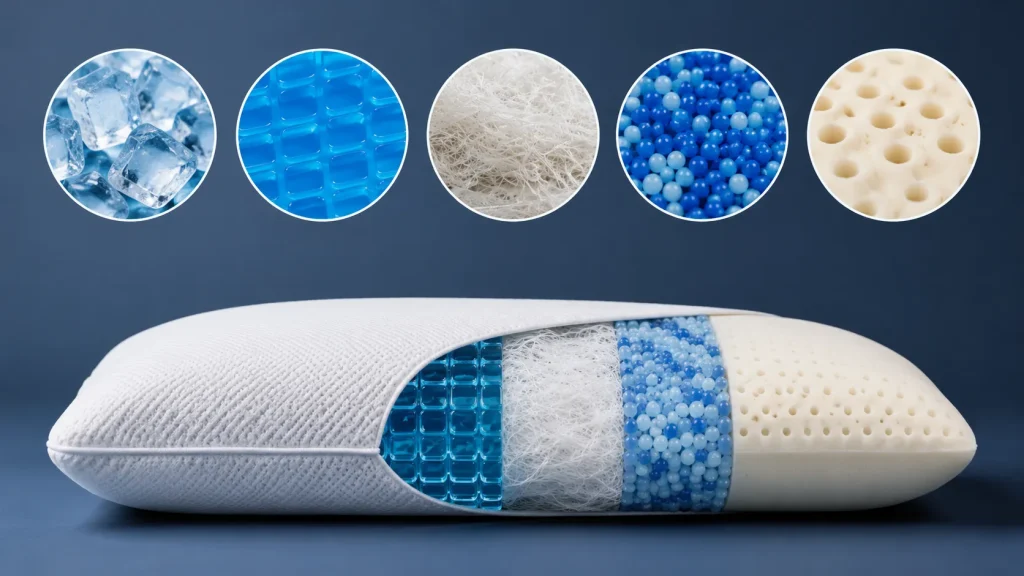
What Makes Cooling Pillows Cool? The Short Answer
Here’s something most people don’t realize — a cooling pillow doesn’t create cold. It manages heat.
Your head produces a surprising amount of body heat while you sleep. A standard pillow traps that heat between your skin and the fill. Over time, the surface warms up — and you’re left flipping to the “cool side” every 20 minutes.
A cooling pillow breaks that cycle. It does one or more of these three things:
- Absorbs heat — pulls warmth away from your skin before it builds up
- Dissipates heat — spreads it across a larger surface so no single spot gets hot
- Allows airflow — lets heat escape through the pillow rather than trapping it inside
Different pillows use different methods. And that’s exactly why some cooling pillows work beautifully — and others disappoint after the first hour.
How Do Cooling Pillows Stay Cool? The Simple Truth
The 5 Key Materials That Make Cooling Pillows Work
Want to know if a cooling pillow will actually keep you comfortable? Start by looking at what it’s made of. These are the materials that genuinely make a difference.
1. Gel Infusions and Gel Layers
Gel is one of the most common cooling materials — and one of the most misunderstood. There are two very different ways it’s used.
A solid gel layer sits on top of the foam. It draws heat away from your skin quickly — similar to pressing your hand on a cool marble countertop. The marble isn’t cold. It just conducts heat away from you fast.
Scattered gel beads mixed into foam work differently. They distribute heat across the fill rather than concentrating it in one spot. This is gentler but less immediately cool to the touch.
💡 Quick Tip: If you want that instantly cool feeling when you first lie down, look for a pillow with a solid gel layer on top — not scattered gel beads throughout the fill.
2. Open-Cell Foam Structure
This one is about what’s happening inside the foam itself — and it matters more than most people think.
Traditional memory foam uses a closed-cell structure. Think of it like a sponge where all the holes are sealed. Air can’t move. Heat gets trapped. That’s why old-school memory foam pillows sleep so warm.
Open-cell foam has connected air pockets — like a real kitchen sponge. Air flows through freely, carrying heat with it as you breathe and move during sleep. The result is a much more breathable sleeping surface.
Most modern gel memory foam pillows combine both technologies — gel for surface cooling plus open-cell structure for ongoing airflow.
3. Phase Change Materials (PCMs)
This is the most advanced cooling technology on the market right now — and honestly, it’s fascinating.
PCMs are materials engineered to absorb heat at a specific temperature — typically around 88°F, which is close to your skin’s surface temperature. When your head warms the pillow to that point, the PCM absorbs the excess heat and stores it — like a thermal battery charging up.
As your bedroom cools overnight, the PCM releases that stored heat back into the room and resets — ready to absorb again. Sleep researchers describe this as active thermoregulation because the material is actively managing temperature, not just passively allowing airflow.
💡 Sleep Science Tip: PCM technology works best when your bedroom temperature drops overnight. If your room stays consistently warm all night, the PCM can’t fully reset and may feel less effective toward morning.
4. Natural Breathable Fills — Latex, Buckwheat, and Wool
Sometimes the most effective cooling technology isn’t technology at all. Natural materials have been keeping sleepers cool for centuries.
Latex has a naturally open, springy structure that allows excellent airflow without any added gel or foam engineering. It also resists dust mites and mold — a bonus for bedroom wellness.
Buckwheat hulls are arguably the most breathable pillow fill available. The hulls shift and conform to your head while leaving constant air gaps between them. I’ve found buckwheat surprisingly cool compared to foam — even without any gel or PCM technology.
Wool is a natural temperature regulator. It absorbs moisture — up to 30% of its weight — without feeling damp. This keeps the pillow surface drier and more comfortable for hot sleepers who also tend to sweat.
5. Breathable Cover Fabrics
Here’s the truth most brands don’t highlight — the cover fabric can make or break a cooling pillow. You could have the most technically advanced fill in the world, but if it’s wrapped in a thick, heat-trapping cover, the cooling effect barely reaches you.
The best cooling pillow covers use:
- Tencel (Lyocell) — incredibly soft, moisture-wicking, and naturally temperature-regulating
- Bamboo-derived fabric — breathable, smooth, and naturally antimicrobial
- Phase change fabric — woven with PCM technology directly into the threads
- Performance knit — stretchy, breathable, and quick-drying
And just as important — your pillowcase matters too. A bamboo or Tencel pillowcase over even a regular pillow can meaningfully reduce heat buildup. It’s one of the simplest bedroom upgrades for hot sleepers.
What Makes Cooling Pillows Cool vs. What’s Just Marketing?
Not every pillow that says “cooling” on the label actually delivers. Here’s how to tell the difference.
Real Cooling Signals
- Specific materials listed — gel layer, PCM, open-cell foam, latex, Tencel cover
- Breathability rating or airflow testing mentioned
- Temperature-neutral or heat-dissipating — not just “cool touch” (which fades)
- Verified customer reviews mentioning all-night comfort — not just “cool at first”
Marketing Red Flags
- “Cooling” with no materials specified
- Dense foam fill with only a thin gel cover — warmth will breakthrough quickly
- “Cool touch” fabric with no actual breathable fill underneath
- No mention of airflow, breathability, or heat management in the description
💡 Buyer Tip: Read the one-star reviews first. Hot sleepers who were disappointed will tell you exactly when and why the cooling effect stopped working — usually within the first hour or after a few months of use.
Why Your Bedroom Environment Matters Too
Here’s something I wish more pillow brands were upfront about — even the best cooling pillow has limits.

If your bedroom is consistently above 72°F, even a PCM pillow will struggle to keep you comfortable all night. Cooling pillows work best as part of a complete sleep environment — not as a standalone solution.
Think of it like this. A cooling pillow is like wearing breathable athletic fabric on a hot day. It helps significantly. But it works even better when you’re also in a shaded area with a light breeze. The fabric alone can only do so much.
Here are the things that work alongside a cooling pillow:
- Room temperature: Sleep researchers suggest 65–68°F as the optimal bedroom temperature for sleep
- Breathable sheets: Cotton percale or bamboo — not microfiber, which traps heat
- Lightweight duvet: A lower tog duvet in warmer months makes a huge difference
- Air circulation: A ceiling fan or bedside fan assists heat dissipation significantly
- Breathable pillowcase: Never use a thick cotton pillowcase over a cooling pillow
[INTERNAL LINK: How to Create a Cool Sleep Environment in Summer]
Key Facts About Cooling Pillow Materials Most People Don’t Know
I’ve spent a lot of time researching sleep accessories — and these are the facts that genuinely surprised me when I first learned them.
- Copper-infused foam is a real technology — copper is a natural heat conductor and antimicrobial material. It’s not just a gimmick.
- Graphite-infused foam works similarly to copper — it conducts heat away from the surface faster than standard foam alone.
- Gel beads vs gel layer is one of the most important distinctions — gel layers cool faster; gel beads cool more evenly over time.
- Latex runs cooler than gel foam in many real-world tests — because airflow is continuous, not just surface-level.
- Your pillowcase blocks more cooling than you think — a standard 400+ thread count cotton pillowcase can reduce a cooling pillow’s effectiveness by up to 40%.
- PCM pillows need cool rooms to reset — in a consistently warm bedroom, they lose their advantage after a few hours.
Who Benefits Most From a Cooling Pillow?
Cooling pillows aren’t just for people who describe themselves as “hot sleepers.” The benefits are broader than most people expect.
| Sleeper Type | Main Benefit | Best Material Match |
|---|---|---|
| Hot sleepers | Reduces night sweats and overheating | Gel layer + open-cell foam |
| Menopausal women | Manages hot flashes during sleep | PCM technology |
| Side sleepers | More skin contact = more heat trapped | Latex or buckwheat |
| People in warm climates | Supplements cooling in warm bedrooms | Breathable natural fill |
| Athletes | Higher body temp after training | Copper-infused foam |
| Light sleepers | Heat discomfort causes frequent waking | Any breathable option |
| Pillow-flippers | Always chasing the cool side | PCM or gel layer |
Many people I know who switched to a cooling pillow didn’t think they were particularly hot sleepers. But once they slept cooler consistently, they realized just how much that background discomfort had been disrupting their sleep — without them fully noticing.
Simple Tips to Get More From Your Cooling Pillow
Once you have a cooling pillow, these habits will help it work at its best every night.
- Switch your pillowcase first. A bamboo or Tencel pillowcase makes an immediate difference — even before upgrading the pillow itself.
- Cool your room before bed. Run a fan or AC for 30 minutes before sleep. A pre-cooled room gives your pillow a head start.
- Keep the pillow clean. Oils, sweat, and dust clog open-cell foam over time. Use a pillow protector and wash it regularly.
- Don’t stack pillows. Using a cooling pillow under another pillow traps heat instead of releasing it. Let it breathe.
- Give it a few nights. PCM technology especially needs a few nights of use to work at full effectiveness as it adapts to your typical sleep temperature.
Frequently Asked Questions
What makes a cooling pillow different from a regular pillow?
A cooling pillow uses specific materials — like gel, open-cell foam, PCM, latex, or breathable covers — designed to move heat away from your head as you sleep. A regular pillow has no heat management technology and tends to trap warmth, causing that familiar warm-pillow feeling after just a few minutes.
How long does a cooling pillow actually stay cool?
It depends on the technology. Gel surface pillows feel coolest in the first 1–2 hours. Open-cell foam and latex provide consistent airflow-based cooling all night. PCM pillows actively regulate temperature for 4–6 hours and partially reset as room temperature drops. No pillow stays ice-cold all night — they moderate temperature rather than creating cold.
Do cooling pillows work in a hot bedroom?
They help, but they work best in a room between 65–68°F. In a consistently hot bedroom above 72°F, even the best cooling pillow will struggle after a few hours. Pairing a cooling pillow with a fan, breathable sheets, and a lightweight duvet makes the biggest combined difference.
Is gel foam or latex better for cooling?
Both work well but in different ways. Gel foam provides a cool-to-touch surface feeling that’s immediately noticeable. Latex provides steady, all-night airflow cooling that’s less dramatic at first but more consistent over time. Hot sleepers who also want support often prefer latex for long-term comfort.
Can a pillowcase cancel out a cooling pillow’s effect?
Yes — significantly. A thick cotton or microfiber pillowcase acts as an insulating layer between you and the cooling technology. Always pair a cooling pillow with a breathable pillowcase made from bamboo, Tencel, or performance knit fabric to get the full benefit.
Final Thoughts: What Makes Cooling Pillows Cool Is Smarter Than You Think
So — what makes cooling pillows cool? It comes down to three things working together: smart materials that absorb or conduct heat, open structures that allow airflow, and breathable covers that don’t block the effect before it reaches you.
The best cooling pillows combine at least two of these approaches — which is why a gel layer over open-cell foam consistently outperforms a standard foam pillow with just a “cool touch” cover label.
Start with your pillowcase if you’re not ready to invest in a new pillow yet. Then look at your bedroom temperature. Small changes in your sleep environment add up — and once you find what works, better sleep follows naturally.


