How Do Cooling Pillows Stay Cool? The Simple Truth

You flip your pillow to the cold side. But after a few minutes — it’s warm again. Sound familiar? How do cooling pillows stay cool when a regular pillow just can’t? That’s exactly what I’m going to explain today. By the end of this article, you’ll know the real science behind cooling pillows, what makes them actually work, and why some work better than others.
What Is a Cooling Pillow, Exactly?
Here’s a question worth asking first — is a cooling pillow actually cold? Not exactly.
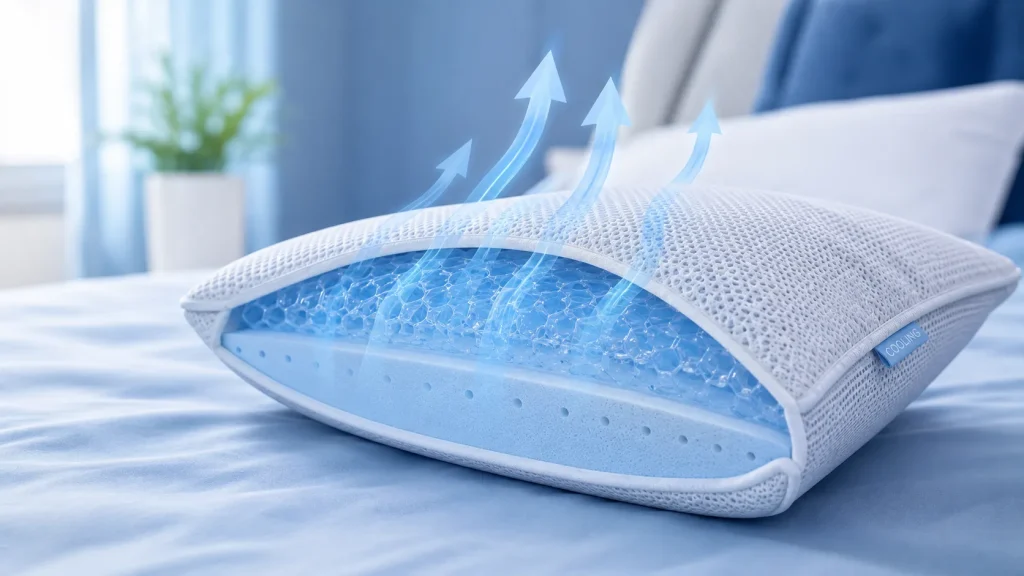
A cooling pillow is not frozen or chilled. It doesn’t plug in or run on batteries. Instead, it’s designed to move heat away from your head as you sleep. Think of it like a breathable window on a hot day. The window doesn’t create cold air. It just lets the warm air escape.
That’s the core idea. Cooling pillows either absorb your body heat, move it away, or let air flow through so heat doesn’t build up. Different pillows do this in different ways — and that’s where it gets interesting. [INTERNAL LINK: What Is a Cooling Pillow — Full Guide]
How Do Cooling Pillows Stay Cool? The Science Behind It
Most people assume cooling pillows use some kind of magic material. But the truth is simpler — and smarter — than that.
There are three main ways cooling pillows manage heat. Each method works differently depending on the materials used.
1. Heat Absorption (Phase Change Materials)
Phase change materials — or PCMs — are the most advanced cooling technology in pillows today. They’re often found in pillow covers or infused into foam.
Here’s how they work. PCMs are designed to absorb heat at a specific temperature — usually around 88°F, which is close to your skin temperature. When your head warms the pillow, the PCM absorbs that heat and stores it — like a sponge soaking up water.
The result? The pillow surface stays cooler for longer. Sleep experts describe this as active cooling because the material is actually doing something with the heat — not just letting it pass through.
💡 Quick Tip: PCM technology works best in rooms that are already reasonably cool. If your bedroom is very hot, even a PCM pillow will eventually warm up.
2. Heat Dissipation (Gel and Copper Infusions)
Gel-infused pillows work differently. Instead of absorbing heat, they spread it out across a larger surface area. Imagine placing your hand on a cold marble countertop. The marble pulls heat away from your skin fast. Gel works on a similar principle.
Copper-infused pillows do something similar. Copper is a natural heat conductor — it draws heat away from your body quickly. Some pillows combine both gel and copper for a stronger cooling effect.
In my experience, gel-infused pillows feel noticeably cooler in the first hour of sleep. But they can warm up by morning if airflow is limited.
3. Airflow and Breathability (Open-Cell Foam and Natural Fills)
This is the most natural cooling method — and honestly, it’s one of the most effective for all-night comfort.
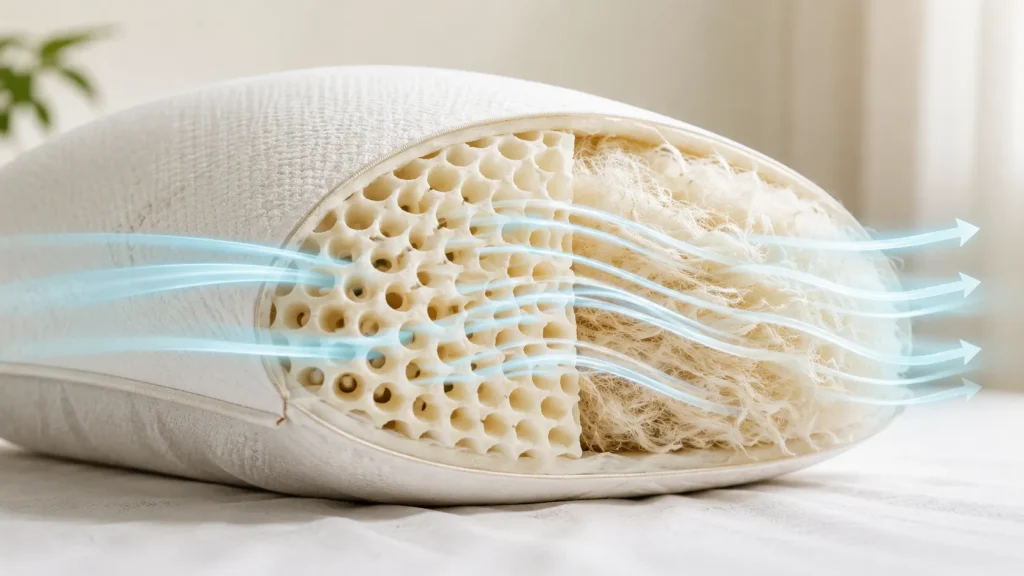
Open-cell foam has a sponge-like structure with tiny connected air pockets. Air moves freely through these pockets, carrying heat away as you sleep. Traditional memory foam traps air inside closed cells — which is why it sleeps hot.
Natural fill pillows — like buckwheat, latex, and wool — also allow excellent airflow. Buckwheat hulls, for example, shift and adjust with your head while leaving gaps for air to circulate. I’ve found buckwheat pillows surprisingly cool compared to foam alternatives.
Now that you understand how the cooling works, let’s look at why it actually matters for your sleep quality.
Why Sleeping Cool Matters More Than You Think
Did you know your body temperature actually drops when you fall asleep? It’s not a coincidence — it’s biology.
Your core body temperature needs to fall by about 1–2°F to trigger proper sleep. Sleep researchers call this thermoregulation. When your bedroom or pillow traps heat near your head, your body struggles to cool down. That struggle can delay sleep, cause restlessness, or wake you up during the night.
A hot pillow is like trying to cool down while wearing a hat indoors. Your head radiates a significant amount of body heat — and if that heat has nowhere to go, it comes right back to you.
I spoke to a friend who switched from a standard memory foam pillow to an open-cell latex pillow last summer. She said the difference was immediate. She stopped waking up at 2am feeling overheated — something she’d dealt with for years.
💡 Sleep Fact: Your head and neck release a large portion of your body’s heat during sleep. Keeping this area cool supports your body’s natural sleep cycle.
How Does a Cooling Pillow Work?
Understanding why cooling matters helps you choose the right pillow — but there are a few facts about cooling pillows that most people never hear about.
Key Facts Most People Don’t Know About Cooling Pillows
Here’s something that surprises most people — not all cooling pillows cool the same way. And some marketed as “cooling” barely cool at all.
- Gel beads cool differently than gel layers. A solid gel layer on top of foam cools more evenly than scattered gel beads mixed into foam.
- Pillow covers matter as much as the fill. A breathable cover made from Tencel, bamboo, or moisture-wicking fabric adds significant cooling power — even over a standard foam fill.
- PCM technology resets overnight. Phase change materials release stored heat slowly as the room cools down — so they’re ready to absorb again the next night.
- Latex sleeps cooler than memory foam — naturally. Latex has an open-cell structure without any added technology.
- Thread count affects cooling. Lower thread count pillowcases (under 400) allow more airflow than high thread count options that feel silky but trap heat.
These details can genuinely change which cooling pillow is right for you — and help you avoid wasting money on a pillow that just uses the word “cooling” as a marketing term.
Common Mistakes People Make With Cooling Pillows
Even the best cooling pillow won’t work well if you’re making one of these common mistakes.
Mistake 1: Using a Heavy Pillowcase
This one catches almost everyone off guard. You buy a great cooling pillow — then cover it with a thick cotton pillowcase. The pillowcase blocks airflow and traps heat right at the surface. Your cooling pillow never gets a chance to work properly.
Switch to a bamboo or Tencel pillowcase. These fabrics are naturally breathable and moisture-wicking — a perfect match for a cooling pillow.
Mistake 2: Keeping a Hot Bedroom
Cooling pillows reduce heat buildup — but they can’t fight a 78°F bedroom alone. Sleep researchers suggest keeping your bedroom between 65°F and 68°F for optimal sleep. A cooling pillow works best as part of a cooler sleep environment overall.
Mistake 3: Expecting an Ice-Cold Feeling All Night
Some people expect a cooling pillow to feel cold like an ice pack. That’s not how they work. They moderate temperature — keeping the surface neutral rather than warm. That’s actually what your body needs for good sleep.
Mistake 4: Ignoring Pillow Maintenance
Dust, oils, and sweat build up in pillow fill over time. This buildup can clog the open-cell structure of foam and reduce breathability significantly. Use a washable pillow protector and follow the manufacturer’s cleaning instructions to keep performance at its best.
💡 Pro Tip: Run a fan in your bedroom directed toward your bed — not at your face. Moving air helps cooling pillows perform better by assisting heat dissipation.
Now that you know what not to do, here are the practical steps that will actually make a difference.
Practical Tips to Get the Most From Your Cooling Pillow
Getting a cooling pillow is just the first step. Here’s how to make sure it actually works well for you every night.
- Choose the right cover first. Before buying a new pillow, check if a bamboo or Tencel pillowcase alone improves your current pillow. It often does — and costs far less.
- Cool your room before bed. Run your air conditioning or a fan for 30 minutes before sleep. A pre-cooled room helps your pillow start working immediately.
- Keep your pillow clean. Wash your pillowcase at least once a week. Use a pillow protector to extend the life of the fill.
- Match the pillow to your sleep position. Side sleepers need more loft (height). Back and stomach sleepers need lower loft. A pillow that’s wrong for your position creates pressure — and more heat from contact.
- Try the flip test. After a week with your cooling pillow, check if you’re still flipping it to the cool side regularly. If you are, the fill may not be breathable enough — and an upgrade might help.
- Layer smart. Pair your cooling pillow with breathable sheets — cotton percale or bamboo — and a lightweight duvet. The whole sleep system works together.
Who Benefits Most From a Cooling Pillow?
Cooling pillows aren’t just for people who “run hot.” Many different sleepers find real benefit from them.
| Sleeper Type | Why a Cooling Pillow Helps | Best Cooling Method |
|---|---|---|
| Hot sleepers | Reduces night sweats and overheating | Gel + open-cell foam |
| Menopausal women | Helps manage hot flashes at night | PCM technology |
| Side sleepers | More contact with pillow = more heat buildup | Latex or buckwheat |
| People in warm climates | Supports thermoregulation in hot rooms | Breathable natural fill |
| Athletes | Body temperature higher after training | Copper-infused foam |
| Light sleepers | Discomfort from heat causes waking | Any breathable option |
Many people I know who switched to a cooling pillow didn’t consider themselves “hot sleepers” at first. But once they slept cooler, they realized how much heat had been disrupting their sleep without them knowing.
Frequently Asked Questions
Do cooling pillows actually work?
Yes — but how well depends on the technology and materials used. Pillows with open-cell foam, PCM, or gel infusions provide measurable cooling compared to standard foam pillows. The effect is strongest in the first few hours of sleep.
How long does a cooling pillow stay cool?
Most cooling pillows moderate temperature effectively for 4 to 6 hours. PCM pillows can reset and cool again as room temperature drops overnight. Breathable natural fill pillows like latex and buckwheat tend to maintain consistent coolness all night.
Can I make my regular pillow cooler without buying a new one?
Yes. Start with a bamboo or Tencel pillowcase — it makes a noticeable difference on its own. You can also cool your bedroom before bed and use a lightweight breathable pillowcase as an easy first step.
Are cooling pillows safe to use every night?
Absolutely. Cooling pillows use passive temperature management — no electricity, no chemicals released during sleep. They’re safe for nightly use for adults and older children. Always check manufacturer guidelines for specific materials.
What is the best material for a cooling pillow?
It depends on your needs. Latex offers natural breathability and durability. Gel-infused foam provides immediate surface cooling. Buckwheat allows maximum airflow. PCM covers offer active heat absorption. Many people find a combination pillow — such as gel-infused open-cell foam — works best overall.
Final Thoughts: Sleeping Cool Is Simpler Than You Think
So — how do cooling pillows stay cool? They work by absorbing heat, dissipating it, or allowing air to flow freely through their structure. Some use advanced PCM technology. Others rely on natural breathable fills. Many use a smart combination of both.
The key takeaway is this—a cooling pillow doesn’t create cold. It manages heat. And that simple difference is what gives your body the temperature conditions it needs to sleep deeply and wake up rested.
Start with your pillowcase if you’re not ready for a full upgrade. Then think about your room temperature. Small changes add up—and better sleep is worth every one of them. [INTERNAL LINK: How to Build the Perfect Cool Sleep Environment]