
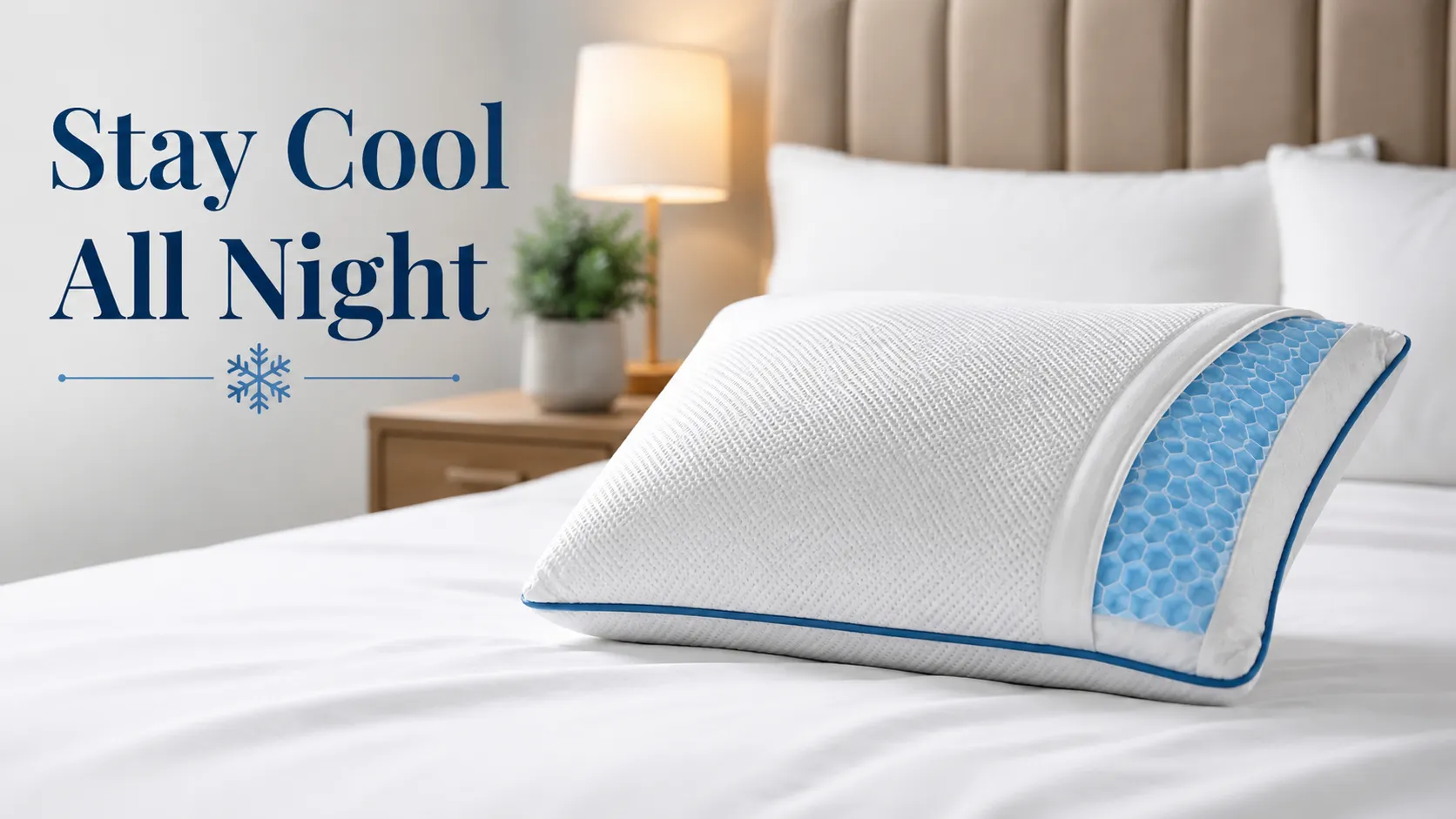
What Is a Cooling Pillow? A Simple Guide for Better Sleep

A cooling pillow is a pillow made to reduce heat and keep your head cool at night. Many people use cooling pillows to sleep more comfortably, especially hot sleepers and people who wake up sweaty.
Quick Answer
A cooling pillow helps move heat away from your head and neck while you sleep. It may use cooling gel, breathable fabric, memory foam with airflow holes, or natural materials like bamboo and latex.
Many people find cooling pillows more comfortable during warm nights or in bedrooms with poor airflow.
My Experience With Cooling Pillows
I started using a cooling pillow during a hot summer in my small bedroom apartment.
I often woke up sweaty and flipped my pillow many times each night.
After trying a cooling pillow, my bed felt more comfortable. My pillow stayed cooler longer, and I slept more peacefully.
That is why I now recommend cooling pillows for many cozy bedroom setups.
What Is a Cooling Pillow?
A cooling pillow is a pillow designed to stay cooler than a regular pillow.
It does not usually feel ice cold. Instead, it helps stop heat from building up while you sleep.
Many cooling pillows use:
- Cooling gel
- Breathable cotton
- Bamboo fabric
- Latex foam
- Ventilated memory foam
- Moisture-wicking covers
These materials may help improve sleep comfort during the night.
Why Cooling Pillows Matter
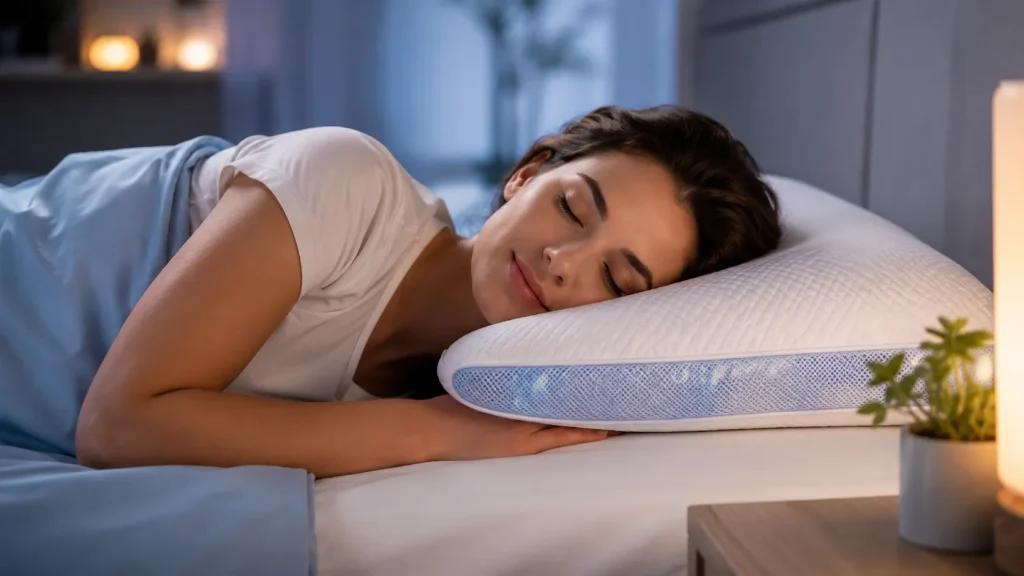
Your head and neck hold a lot of heat while you sleep.
If your pillow traps heat, your whole body may feel warmer.
This can make sleep less comfortable.
Many hot sleepers wake up because their pillow feels too warm.
A cooler pillow may help your bedroom feel calmer and more relaxing.
According to the Sleep Foundation, bedroom temperature can affect sleep quality.
How Does a Cooling Pillow Work?
Cooling pillows use different methods to reduce heat.
Cooling Gel
Some pillows contain cooling gel layers.
The gel absorbs some body heat and may feel cooler at first touch.
Breathable Materials
Many cooling pillows use breathable fabric.
This helps air move through the pillow more easily.
Ventilated Foam
Some memory foam pillows have small airflow holes.
These holes reduce heat buildup inside the pillow.
Moisture Control
Bamboo and cotton covers may help remove sweat from the skin.
This can help the pillow feel fresher during warm nights.
Common Cooling Pillow Materials
| Material | Feel | Best For |
|---|---|---|
| Gel Memory Foam | Soft and cool | Hot sleepers |
| Bamboo Fabric | Light and breathable | Sweaty sleepers |
| Latex Foam | Supportive and airy | Side sleepers |
| Cotton Cover | Soft and natural | Everyday comfort |
Who May Like a Cooling Pillow?
Cooling pillows are popular with many types of sleepers.
- Hot sleepers
- Side sleepers
- People with night sweats
- Warm climate sleepers
- People using memory foam mattresses
- Small bedroom owners
I also think cooling pillows work well in guest bedrooms.
They help create a fresher sleep space for visitors.
Cooling Pillow vs Regular Pillow
| Feature | Cooling Pillow | Regular Pillow |
|---|---|---|
| Heat Control | Better airflow | May trap heat |
| Fabric | Breathable | Basic fabric |
| Comfort | Cooler feeling | Can feel warm |
| Best For | Hot sleepers | General use |
Best Bedroom Setup for a Cooling Pillow
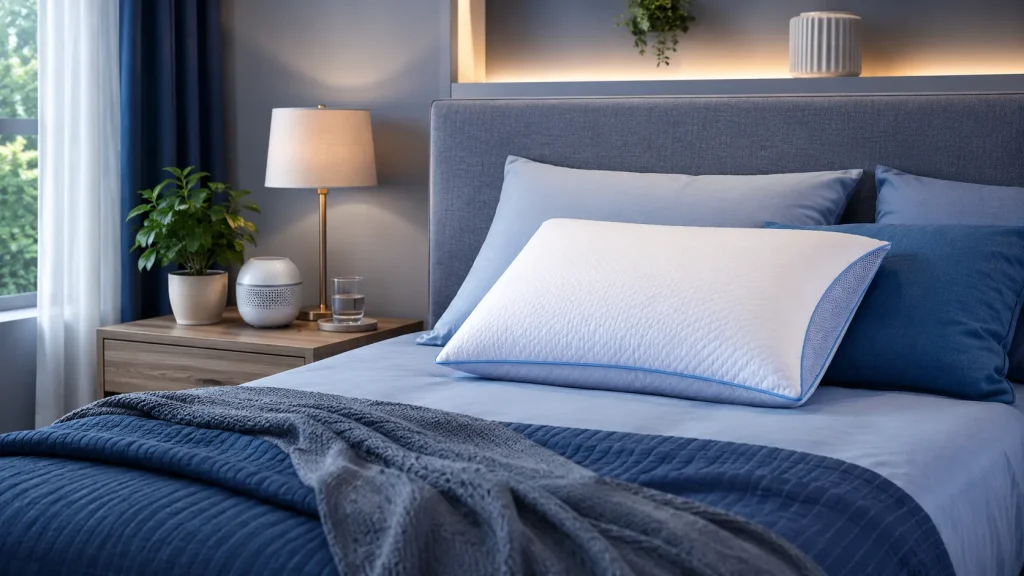
A cooling pillow works better in a comfortable bedroom environment.
I usually suggest:
- Breathable bedsheets
- Cotton or bamboo bedding
- Blackout curtains
- White noise for relaxation
- Good bedroom airflow
- A small bedside fan
Even simple bedroom changes may help improve sleep comfort.
Cooling Pillows for Different Sleep Positions
Side Sleepers
Side sleepers often need thicker pillows with neck support.
Cooling memory foam may work well here.
Back Sleepers
Medium-height cooling pillows usually feel comfortable for back sleepers.
Stomach Sleepers
Soft and thin cooling pillows may feel better for stomach sleeping.
Common Cooling Pillow Mistakes
| Mistake | Better Option |
|---|---|
| Using thick polyester bedding | Use breathable cotton |
| Keeping the room too warm | Lower bedroom temperature |
| Ignoring pillow height | Match pillow to sleep position |
| Using old pillowcases | Use breathable pillowcases |
Can Cooling Pillows Really Help?
Many people say cooling pillows help them feel more comfortable.
They may not solve every sleep problem, but they can improve bedroom comfort.
I noticed fewer nighttime wakeups after switching to a cooler pillow setup.
Simple comfort changes often make a big difference over time.
Helpful Tips Before Buying
- Check the pillow material
- Choose breathable fabric
- Think about your sleep position
- Use cooling bedding too
- Avoid overly thick pillow protectors
- Read care instructions carefully
I also recommend washing pillow covers often for a fresher sleep setup.
Notes About Cooling Pillows
Cooling pillows are not medical products.
They mainly help improve comfort and airflow.
If you have serious sleep problems or ongoing pain, talk with a doctor.
You can also read sleep tips from the CDC sleep health page.
Key Takeaways
- Cooling pillows help reduce heat buildup
- They may improve sleep comfort
- Breathable fabric matters a lot
- Cooling gel and airflow foam are common features
- Bedroom temperature also affects sleep quality
- Cooling pillows work best with breathable bedding
Conclusion
A cooling pillow is a simple way to create a more comfortable sleep space.
It may help reduce heat, improve airflow, and support better rest during warm nights.
I think cooling pillows work best when paired with a cozy bedroom setup, breathable bedding, and good airflow.
If your pillow often feels hot, a cooling pillow may be worth trying.
Frequently Asked Questions
What is a cooling pillow made of?
Many cooling pillows use gel foam, bamboo fabric, latex, or breathable cotton materials.
Do cooling pillows stay cold all night?
Most cooling pillows do not stay cold all night, but they may reduce heat buildup.
Are cooling pillows good for hot sleepers?
Yes. Many hot sleepers find cooling pillows more comfortable than regular pillows.
Can side sleepers use cooling pillows?
Yes. Many cooling pillows are designed for side sleepers and neck support.
Do cooling pillows help with night sweats?
They may help improve comfort by reducing heat and improving airflow.
Are bamboo cooling pillows good?
Bamboo fabric is breathable and may help wick away moisture during sleep.
How often should I replace a cooling pillow?
Many people replace pillows every 1–2 years, depending on wear and support.


